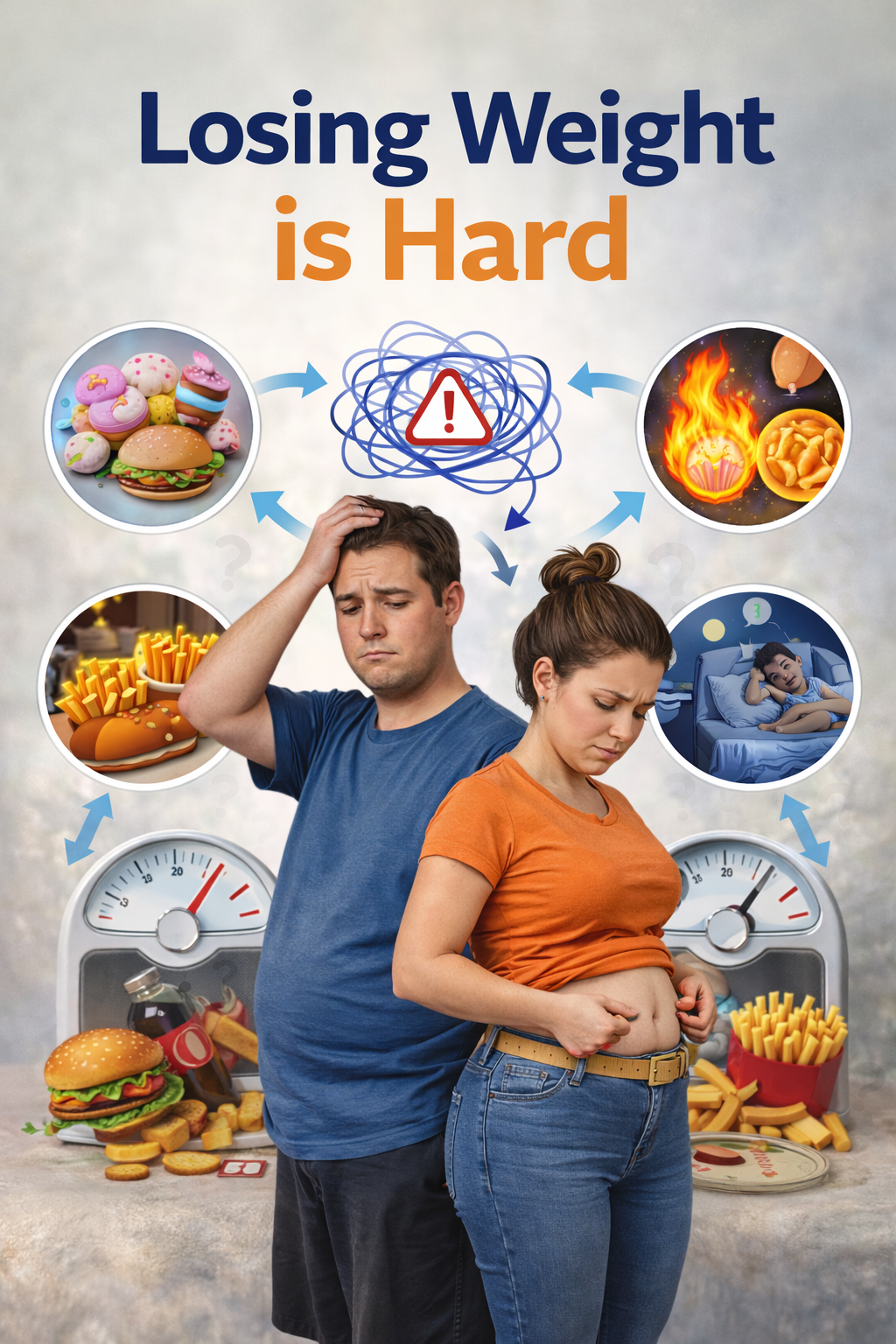

Losing weight sounds simple in theory: eat less, move more, and the pounds should drop. Yet millions of people struggle for months—or even years—without seeing lasting results. If you’ve ever felt frustrated, discouraged, or confused about why weight loss seems so hard, you’re not alone.
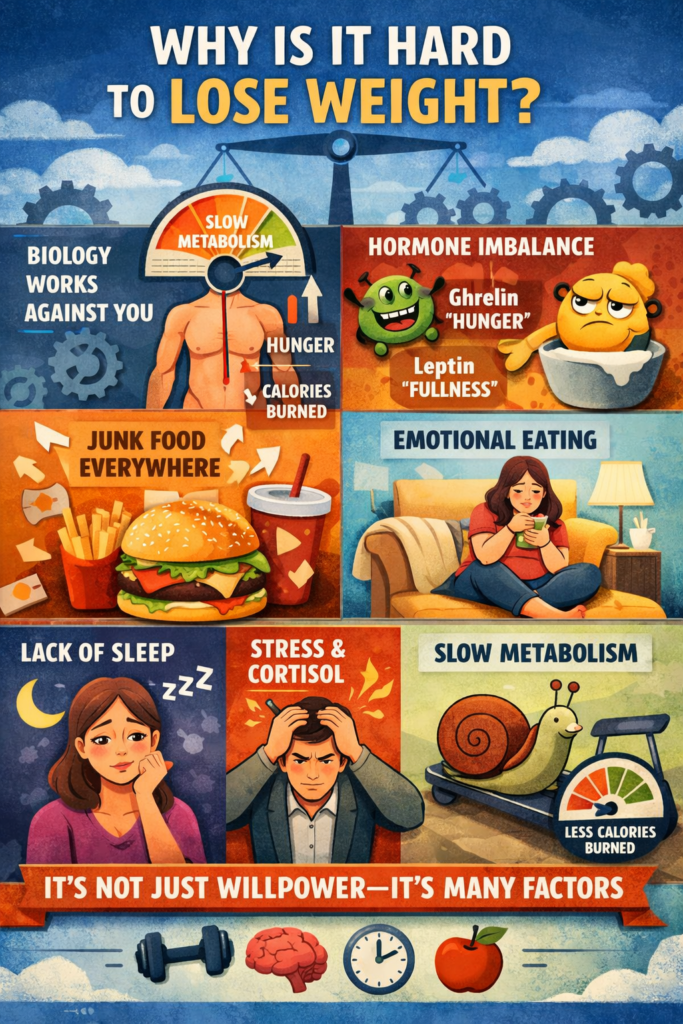
The truth is, losing weight is difficult because it involves far more than willpower. It’s a complex interaction of biology, psychology, hormones, environment, habits, sleep, stress, and even social influence. Understanding these factors can help you stop blaming yourself about why is it so hard to lose weight and start approaching weight loss with smarter, more sustainable weight loss programs.
In this comprehensive guide, we’ll explore the real reasons why losing weight is so hard—and what you can do about it.
Table of Contents
1. Your Body Is Designed to Prevent Weight Loss
One of the biggest reasons why is it so hard to lose weight is biology. Your body is not programmed to help you lose weight—it’s programmed to help you survive.
The Survival Mechanism
For most of human history, food was scarce. When calories were limited, the body adapted by:
- Slowing metabolism
- Increasing hunger hormones
- Reducing energy expenditure
- Preserving fat stores
When you reduce calories today, your body reacts as if it’s facing a famine—even if you’re simply trying to fit into smaller jeans.
Metabolic Adaptation
When you lose weight, your metabolism slows down. This is called adaptive thermogenesis. Your body becomes more efficient and burns fewer calories doing the same activities.
For example:
- At 200 pounds, you might burn 2,200 calories daily.
- After losing 30 pounds, you might only burn 1,800–1,900 calories.
This makes continued weight loss harder and increases the risk of weight regain.
2. Hormones Work Against You
Hormones play a massive role in hunger, fat storage, and cravings.
Leptin and Ghrelin
- Leptin signals fullness.
- Ghrelin signals hunger.
When you lose weight:
- Leptin decreases.
- Ghrelin increases.
Translation? You feel hungrier and less satisfied from meals.
Insulin and Fat Storage
Insulin regulates blood sugar. When you frequently eat processed carbs and sugar, insulin spikes repeatedly. Over time, this can lead to insulin resistance, making fat loss more difficult.
Cortisol and Stress
High stress levels increase cortisol. Elevated cortisol:
- Promotes fat storage (especially belly fat)
- Increases cravings for sugary and salty foods
- Disrupts sleep
Your body under stress prioritizes survival—not fat loss.
3. The Modern Food Environment Is Engineered Against You
Today’s food landscape is vastly different from what humans evolved to handle.
Hyper-Palatable Foods
Processed foods are designed to be irresistible. They combine:
- Sugar
- Salt
- Fat
- Artificial flavors
These foods override natural hunger signals and encourage overeating.
Portion Sizes
Portion sizes have dramatically increased over the last few decades. What used to be a single serving is now often two or three.
Constant Availability
Food is everywhere:
- Gas stations
- Office break rooms
- Drive-thrus
- Delivery apps
Your brain never gets a break from food cues.
4. Emotional Eating and Psychological Factors
Weight loss is not just physical—it’s deeply emotional.
Food as Comfort
Many people use food to cope with:
- Stress
- Anxiety
- Loneliness
- Boredom
- Sadness
Highly processed foods temporarily boost dopamine, the brain’s reward chemical. This creates a cycle of emotional dependence.
Habit Loops
Habits form through repetition:
- Cue → Routine → Reward
For example:
- Cue: Stressful day
- Routine: Ice cream
- Reward: Comfort
Breaking these loops takes conscious effort and consistency.
All-or-Nothing Thinking
Many people fall into the trap of:
- “I messed up today, so the week is ruined.”
- “I ate one cookie, so I might as well binge.”
This mindset often derails progress more than the cookie itself.
5. Diet Culture Creates Unrealistic Expectations
Social media and marketing promote rapid weight loss promises:
- “Lose 20 pounds in 30 days!”
- “Flat belly in 2 weeks!”
This leads to:
- Crash dieting
- Severe calorie restriction
- Unsustainable meal plans
When results slow down (as they naturally do), people feel like failures—even though the plan itself was flawed.
Healthy weight loss typically averages:
- 0.5–2 pounds per week
Anything faster often involves water loss or muscle loss.
6. Muscle Loss Slows Progress
When people diet without strength training or enough protein, they often lose muscle along with fat.
Muscle is metabolically active. Losing it means:
- Lower resting metabolism
- Reduced calorie burn
- Slower long-term results
This is why sustainable weight loss includes resistance training—not just cardio.
7. Sleep Deprivation Disrupts Fat Loss
Sleep is often overlooked in weight loss.
Lack of sleep:
- Increases ghrelin (hunger hormone)
- Decreases leptin (satiety hormone)
- Increases cravings for high-calorie foods
- Reduces insulin sensitivity
Even one night of poor sleep can impact appetite regulation.
Chronic sleep deprivation makes fat loss significantly harder.
8. Stress Makes Weight Loss Harder
Chronic stress keeps the body in a fight-or-flight state.
Effects of stress:
- Increased cortisol
- Elevated blood sugar
- Increased abdominal fat storage
- Emotional eating patterns
Without stress management, weight loss becomes an uphill battle.
9. Weight Loss Requires Behavior Change
Changing your body requires changing your habits.
But behavior change is difficult because it requires:
- Consistency over motivation
- Delayed gratification
- Breaking long-term routines
- Identity shifts
Motivation fluctuates. Systems and habits sustain progress.
10. Social and Environmental Influences
Friends, family, and coworkers influence your choices more than you realize.
Examples:
- Office pizza parties
- Family gatherings centered around food
- Peer pressure to drink alcohol
- Cultural traditions involving large meals
Trying to lose weight in an unsupportive environment is challenging.
11. Alcohol Slows Fat Loss
Alcohol:
- Adds empty calories
- Lowers inhibitions (leading to overeating)
- Disrupts sleep
- Impairs fat oxidation
Even moderate drinking can slow progress.
12. Weight Regain Is Common
After weight loss, the body fights to regain lost weight.
Research shows:
- Hunger hormones remain elevated
- Metabolism stays lower than expected
- Appetite increases
This is why maintenance requires ongoing effort—not a return to old habits.
13. Genetics Play a Role
Some individuals are genetically predisposed to:
- Higher fat storage
- Slower metabolism
- Increased appetite signals
Genetics don’t make weight loss impossible—but they can make it more challenging for some people.
14. Lack of Patience
Weight gain often happens slowly over years. Yet people expect rapid reversal.
Sustainable fat loss requires:
- Months of consistency
- Small adjustments
- Long-term mindset shifts
Short-term thinking leads to long-term frustration.
15. Scale Obsession
The scale doesn’t tell the whole story.
Weight fluctuates due to:
- Water retention
- Hormonal changes
- Sodium intake
- Muscle gain
When people rely only on the scale, they may quit prematurely.
The Good News: Why You’re Not Broken
If losing weight feels hard, it’s not because you lack discipline. It’s because:
- Your body is designed to resist weight loss.
- Modern environments encourage overeating.
- Hormones shift during dieting.
- Emotional and psychological patterns are powerful.
Understanding this removes shame from the equation.
How to Make Weight Loss Easier (and More Sustainable)
While weight loss is challenging, it becomes manageable with the right strategy.
1. Focus on Protein
Protein increases satiety and preserves muscle.
2. Lift Weights
Strength training protects metabolism.
3. Prioritize Sleep
Aim for 7–9 hours per night.
4. Manage Stress
Incorporate:
- Walking
- Meditation
- Deep breathing
- Journaling
5. Eat Mostly Whole Foods
Base meals around:
- Lean protein
- Vegetables
- Healthy fats
- Fiber-rich carbs
6. Create Systems
Instead of relying on motivation:
- Meal prep weekly
- Schedule workouts
- Keep healthy snacks available
7. Track Non-Scale Wins
Celebrate:
- Increased strength
- Better energy
- Improved mood
- Clothes fitting better
Final Thoughts
Losing weight is difficult because it requires fighting both biology and environment at the same time. It challenges habits, hormones, emotions, and patience.
But difficult does not mean impossible.
The key is shifting from:
- Short-term dieting
to - Long-term lifestyle change
When you approach weight loss with compassion, science-backed strategies, and realistic expectations, progress becomes sustainable.
If you’ve struggled before, that doesn’t mean you failed. It means you were likely fighting an uphill battle without understanding the full picture.
Now you do.
And that knowledge changes everything.