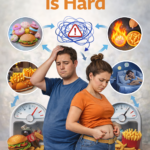
Losing weight is difficult for many people because it’s influenced by far more than willpower. Your body, habits, environment, and even stress levels all play a role—often working against you.
First, biology fights weight loss. When you reduce calories, your body adapts by slowing metabolism and increasing hunger hormones like ghrelin, while decreasing fullness hormones like leptin. This is your body’s survival system trying to protect stored energy, not a personal failure.
Second, modern lifestyles make weight gain easy. Highly processed foods are calorie-dense, hyper-palatable, and everywhere. They spike blood sugar, trigger cravings, and make it hard to stop eating—even when you’re not truly hungry.
Third, stress and poor sleep sabotage progress. Chronic stress raises cortisol, which encourages fat storage (especially around the midsection) and increases cravings for quick-energy foods. Lack of sleep further disrupts hunger hormones and lowers motivation to exercise.
Fourth, muscle loss and inactivity can stall results. As people diet—especially without strength training—they often lose muscle along with fat. Less muscle means a slower metabolism, making continued weight loss harder over time.
Finally, emotional and behavioral patterns matter. Eating for comfort, routine, or social reasons is common, and long-term change requires addressing these habits—not just following a short-term diet.
That’s why sustainable weight loss works best when it supports metabolism, hormones, nutrition, movement, sleep, and stress management together—not extreme restriction or quick fixes.